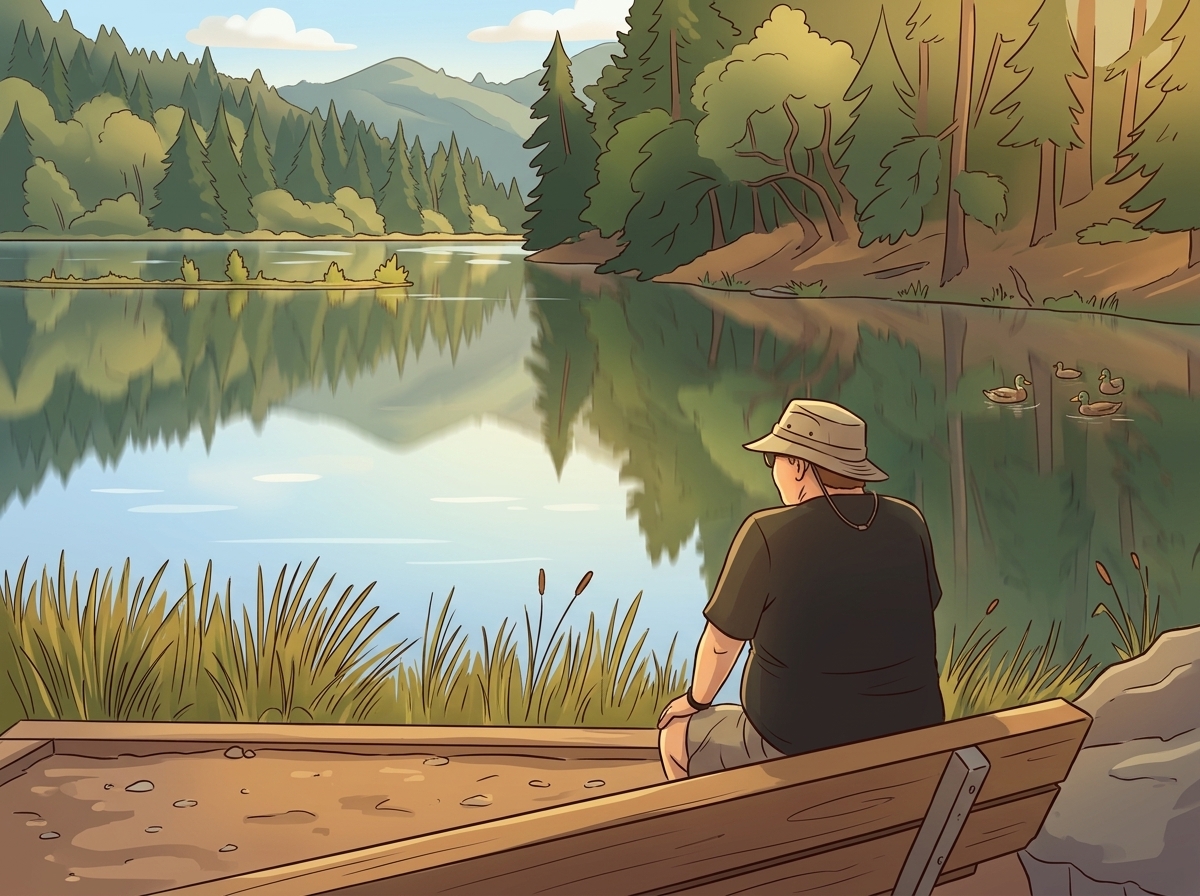
I’ve always had an itch to understand human behavior—why we do the things we do, how our minds tick, and where our sense of spirit fits into the messy reality of everyday living. That’s probably why I find myself picking up Psychology Today from time to time. Not because the experts have life entirely figured out, but because it gives me a mirror to reflect on what it actually means to walk this human road.
A while back, I came across an article summarizing research on the different varieties of purpose and how they connect to our happiness. The researchers identified several distinct types, ranging from basic survival and material accumulation, to identity roles, to altruism and transpersonal or spiritual meaning. Looking at their findings, it struck me that many of these aren't really separate boxes at all. They are different branches of the same tree, unfolding as we move through different seasons of life.
For the first half of my life, I defined myself largely by the "hats" I wore. I wore the hat of my career in video engineering and audio-visual work, and I wore the hat of being a family provider and a dad. On the outside, things looked fine. But underneath those roles, I was carrying a lot of unhealed pain from a difficult upbringing, along with a deep, quiet loneliness. I thought that if I just performed well enough in my job and held onto those identity hats tightly enough, the empty space inside me would take care of itself.
It didn't. When my marriage fell apart and my home life dissolved, those hats were stripped away.
That was the real turning point for me. I found myself in my early forties with barely enough money to get by, very few possessions, and no clear script for what came next. Chasing career status or accumulating things was completely out of reach. In that uncomfortable, stripped-down space, I was forced to stop looking outward for fulfillment and start looking within. My purpose had to become inward growth—learning how to sit with my own pain, understanding what makes us tick, and grounding myself in deeper spiritual values.
Looking back, I had just enough of a basic safety net to keep a roof over my head and food on the table while I picked up the pieces. That little bit of breathing room gave me the mental space to turn inward and uncover who I was beneath the masks.
And that is where personal reflection has to meet the reality of the world we live in.
In Western culture, we love the myth that finding meaning is purely a matter of individual willpower—that anyone can just decide to discover their higher calling if they try hard enough. But that completely ignores how heavily our circumstances condition us. When people are stuck in pure survival mode—working two or three jobs just to keep up with rent, worrying about how they’re going to feed their kids, or trapped in unstable situations—survival is the only hat they have the luxury to wear. You cannot step back to contemplate transpersonal growth or spiritual connection when your nervous system is in a constant, daily panic just to stay afloat.
As I've grown older, my heart aches when I look at the world around us. It breaks my heart to see unhoused folks on our streets and people struggling with severe mental illness who clearly need care, while our society too often chooses to look the other way. We sweep people into corners, criminalize poverty, and place the blame entirely on the struggling individual rather than confronting our collective failure to care for one another. That is not a compassionate society.
The research in that article pointed out something essential: living only in survival mode is strongly tied to unhappiness, while the deepest, most enduring sense of purpose comes from transpersonal and altruistic connection—something that is uncovered and expressed rather than forced. But to uncover that deeper meaning, people first need solid ground to stand on.
If we want a culture where people can truly flourish, we have to decide what our collective purpose is. If our society is built only around individual accumulation and letting the few thrive while the rest scramble, we will continue to see widespread isolation, anxiety, and heartbreak.
True purpose isn't a solitary trophy we win for ourselves. It begins when we realize that we are all fundamentally dependent on one another. When we work to provide a real foundation of safety, equity, and basic dignity for everyone, we remove the constant terror of survival. Only then can we all take off the heavy armor, breathe, and uncover the deeper purpose that has been waiting within us all along.