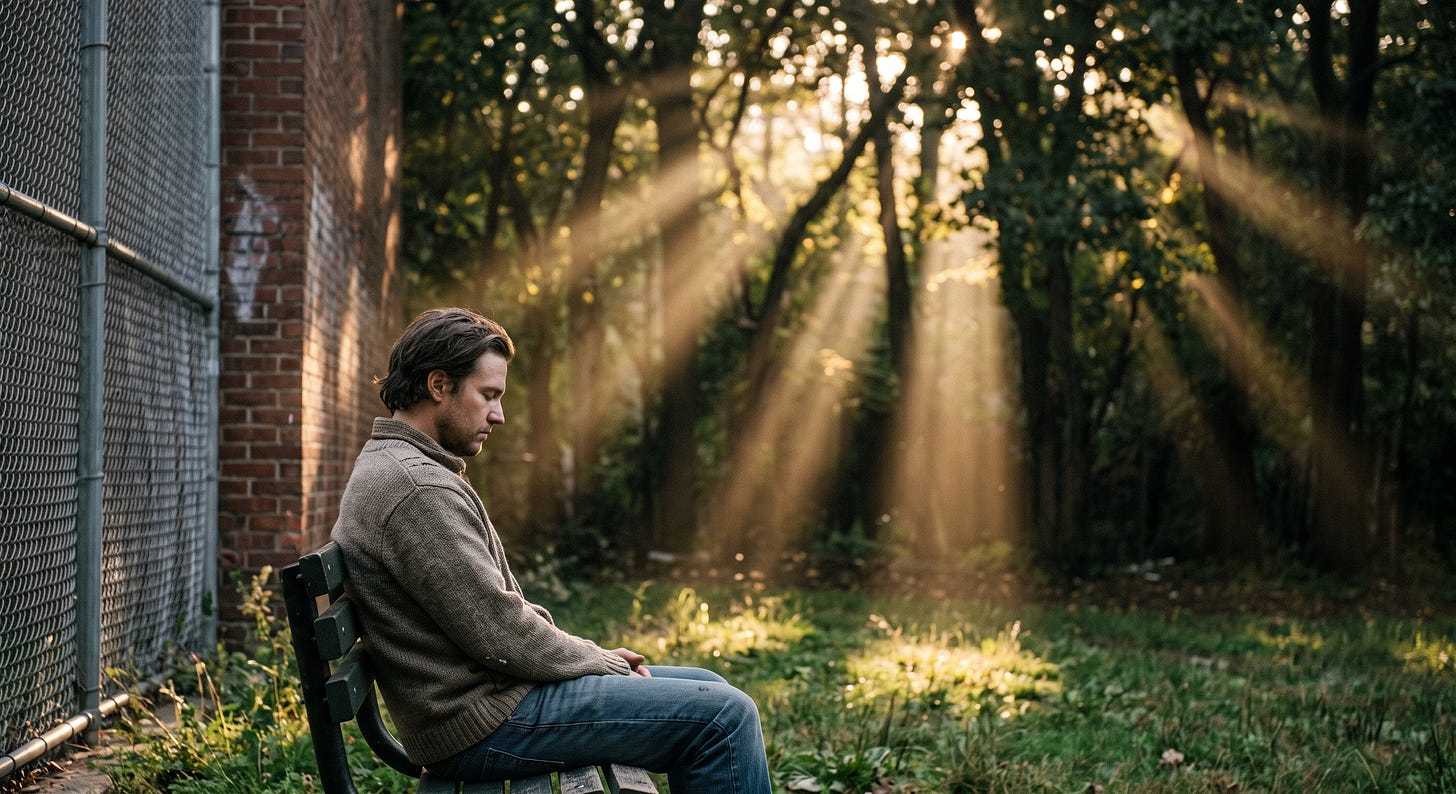
I’m writing this article from a more personal perspective, rather than my usual commentary on worldviews, mindfulness, and spirituality—though I still believe those reflections are vital for us as human beings to keep in mind. Today, I am thinking about relationships and how poor I seem to be at them overall.
In reality, I come from a deeply broken family marked by a great deal of dysfunction. My second dad was a drug addict, and as his addiction progressively worsened, his behavior became increasingly difficult to manage. During my formative years between the ages of six and twelve—keeping mind my siblings were even younger—there was both physical and mental abuse directed at us children and at my mother.
We were poor, but I don’t remember us going hungry because we were receiving welfare at this time. We certainly weren’t eating steaks, lobster, or caviar; but there was a lot of macaroni and cheese, spaghetti, and school meals. And although we lived in what many would call “the ghetto”, there were only a few real issues overall that affected us personally. Yes, there was some violence around us and our family life was chaotic but it overall seemed fairly normal most of the time. There were bullies, and because we were a multiracial family, we got into a few beefs with different folks. Overall, I don’t believe it caused us anything beyond what normal kids experience in this world. In fact, I’m very grateful for my multicultural upbringing.
Still, I am deeply saddened by the ongoing toll on our family. We’ve never really been able to get our act together, and it is clear that our collective mental health is not ideal. I often feel this history has made it difficult for me to move beyond it in many ways. For when I think of what we experienced and its results over time I am saddened.
On top of that, I struggle to remember the things that I believe other people naturally keep track of. I feel little connection to most holidays we celebrate. Without calendar alerts, I wouldn’t remember birthdays, and I’ve never been good at writing birthday cards or sending out Christmas cards. I don’t have many friends, and I rarely feel like I share the same interests with those around me. In many ways, I feel like I’m on an island. My way of thinking appears counter to the way of the world; it often seems as though society doesn’t truly prioritize peace, love, and mutual care. I am not a greedy person, and I am grateful whenever things go well.
I am thankful for how my life has turned out overall because I’ve incorporated a personal philosophy that brings me a great deal of peace of mind. At the same time, I try not to cling to grand dreams, wants, or wishes, as they so often get broken or fail to come to fruition. In many ways, I think it is normal for us to feel this way. We are all trying to be whole, often without knowing how to go about it.
A phrase I frequently return to—both to keep my own spirits up and to encourage others who are struggling—is a call to “be the light.”
To me, being the light does not mean pretending that everything is fine or ignoring the reality of our circumstances. It isn’t about avoidance or forced positivity. Rather, when things seem dark, uncertain, or in flux, being the light means actively seeking ways to navigate through life without creating additional suffering. It means offering quiet encouragement and remaining present to our actual conditions, no matter how difficult they may be.
I am not afraid to talk about dark things because they exist, and avoiding them only makes it easier to build mountains out of them. I don’t want those hardships or my own personal defects to control me. I simply want to love and be a good human being. Sometimes, this leads me to be very open about my experiences with others. And I’ve learned a little adage along the way: when you talk about yourself, people commonly assume you are talking about them. They reflect your words back onto their own lives and notice things about themselves that they may not be ready to face.
Other times, people immediately try to fix you. A while back, I met with a spiritual teacher I respected deeply, who was also a therapist. We hadn’t seen each other in a long time, so we naturally caught up on where we were in life. I asked if he would be interested in being my teacher and shared a bit more of my backstory about growing up. Instead of taking me on as a student, he immediately began giving me therapy. It shocked me; it wasn’t what I had asked for. Suddenly, he was pointing out the apparent lack of love and affection I received in early childhood.
I already knew all of that. But apparently, just speaking about it out loud makes it sound as though you haven’t moved past it. Maybe I have, and maybe I haven’t. All I know is how I feel right now. I am doing the best I can to be the best person I can be, and to be the light for others wherever possible. I know that’s all I can really do anyway. It has never worked out well for me when I’ve tried to carry the weight of the entire world on my shoulders—at times I have wished I could be president, or wished I were a robot that could go out into the world and physically stop anyone from harming another like in “The Day the Earth Stood Still”.
The Buddha noted that suffering is caused by clinging. I don’t think I am intentionally clinging, but at the same time, I know I am not fully free. Most of us are in the same boat, so I know I’m not alone. I try to keep my chin up even when the world seems filled with hate, conflict, and selfishness. We don’t always care for each other the way we should, and we all have our own burdens to carry. First things first—I understand that.
In the end, intention matters. Setting the intention to be the light is a good thing. Setting the intention to not intentionally harm another is a good thing. Setting the intention to be patient, tolerant, loving, and non-judgmental to the best of my abilities—that is enough for right now.
It is as it is right now. It always is. There is no use in wishing it were otherwise. I am living in acceptance and moving forward anyway.